Book
In progress
Precious Economies: Valuing Gems Across Asian Borderland
At the edge of Pakistan’s northwest frontier, Peshawar has long been a crossroads of movement, displacement, and exchange. Partition in 1947, successive conflicts in Afghanistan, and the U.S.-led War on Terror have all pushed refugees, traders, and laborers and their families across borders, creating new livelihoods and professions in the city. Among the most enduring of these is the gemstone trade, where displaced Afghans and Pakistanis alike became miners, cutters, and dealers, transforming raw stones into commodities for global markets.
In this ethnography, Precious Economies traces how histories of migration and conflict have shaped the production and circulation of gems. It shows how dealers and artisans navigate tensions between embodied expertise and institutional authority, as universal standards of gemological assessment confront the strategic ambiguities of borderland markets. From the embodied skills of gem cutters, to Pashtun traders to the formal certifications of local and Euro-American laboratories—and increasingly, the purchasing power of Chinese buyers—the book illuminates how hierarchies of origin, expertise, and legitimacy structure access to the global luxury trade.
By situating Pakistan’s gem economy within a wider history of South Asian displacement and borderland politics, Precious Economies offers new insights into how value, trust, and authenticity are forged under conditions of instability. It will interest readers in anthropology, South Asian studies, migration, and the global study of commodities and markets.
PEER REVIEWED
Articles
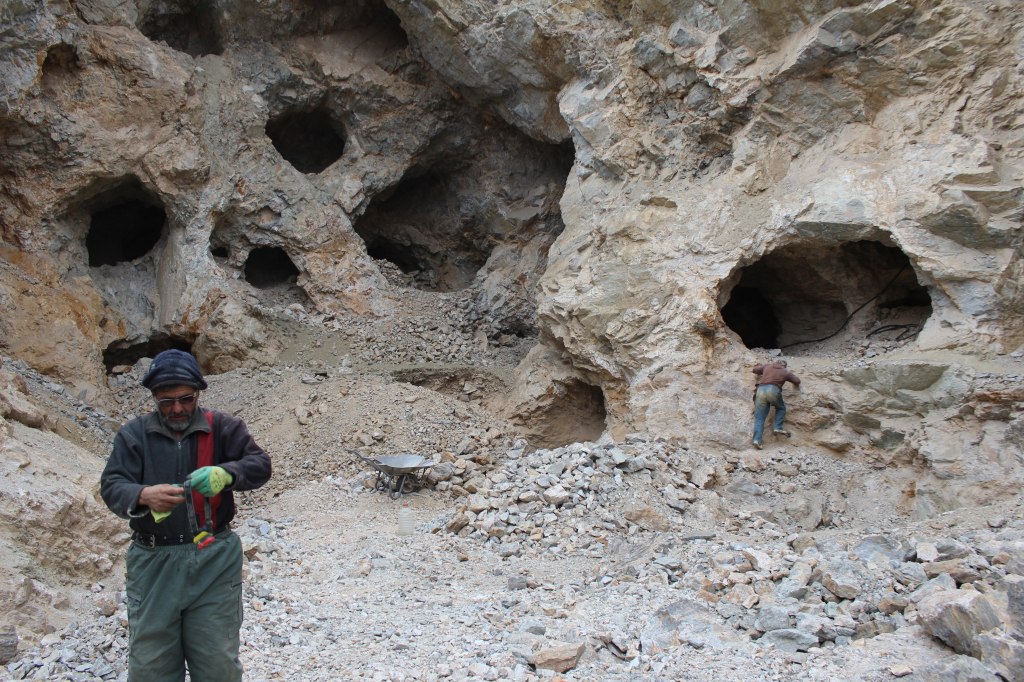
After Geological Exploration: Gemological El Dorado in Global Afghanistan
Comparative Studies in Society and History, 67(3), July 2025, 680-706
Abstract
This paper traces how geological surveys and prospecting across two centuries shaped Afghanistan’s enduring characterization as a mineral-rich “El Dorado.” By investigating the shift in survey methods from comprehensive terrestrial to aerial reconnaissance, I show how geological knowledge production served purposes far beyond imperial resource identification and extraction. Drawing from historical and ethnographic research, including insights from a current emerald mine operator, I uncover how precious stones’ physical properties and circulating narratives about hidden riches propelled—and continue to propel—a vast network of individuals into mining enterprises: from state authorities and local powerbrokers to foreign geologists, mineral collectors, and international aid organizations. The result is the creation of new narratives about extractable wealth that interweave scientific practices and global market dynamics to transcend conventional periodization such as pre-Soviet, Soviet, and United States. These narratives have emerged from and reinforced asymmetrical relationships in both labor and expertise, ultimately positioning Afghan participants precariously within global mineral markets, made riskier still in times of conflict.

Between a Rock and a Hard Place: Ethics of Fieldwork in Northwest Pakistan
International Quarterly for Asian Studies, 53(4), 2022, 587-612
Abstract
In the wake of the US-led and Pakistan-allied “war on terror”, residents in Northwest Pakistan have faced inconceivable structural and physical violence, in ways that pose ethical challenges in ethnographic writing and research. Over the last few decades, militancy, banditry and overall insecurity have hampered relief efforts in the area and significantly weakened basic infrastructure. In this article, the author illustrates how an initial security plan to undertake fieldwork research in this “volatile” region proved somewhat irrelevant because of her positionality, gender and race/ethnicity. The author explores the implications of these dynamics in contexts characterized by unequal gender relations and strict gender segregation. In addition, undertaking empirical work in the context of epistemological frameworks in a region that has been subjected to active conflict, militarised operations and a singular representation in the global and local media, poses other ethical challenges for anthropologists searching for new areas of study and decolonised models of representation. This paper reiterates the importance of a reflexive approach of ethics that acknowledges the interpenetration of race, gender and the thick web of relationships in the production of knowledge and is, at the same time, respectful of cultural specificity.
Geographies of the Classical: Kathak Across India and Hong Kong
Inter-Asia Cultural Studies, 23(4), 509-525
Abstract
This article examines Kathak as an Inter-Asia dance form across India and Hong Kong. Typified as “classical” dance in India, Kathak’s twenty-first-century transposition to Hong Kong is enabled by members of the Indian diaspora and local performers. Kathak’s expansion is also facilitated by an interest in popular Indian culture across Asia, notably through Bollywood. Against this background, Kathak cohabits a tension between a classicized identity in India, and an ethnicized folk representation abroad. Drawing on perspectives of Kathak practitioners and my study of the dance in Hong Kong and India, I examine structures that enable the institutionalization of certain art forms and popularization of others. An analytical consideration of dance as performance art, academic discipline, and professional pursuit requires an Inter-Asia methodology of triangulation to examine narratives of “high” culture. Such an approach offers a variegated understanding of Kathak as an embodied art form that resonates across postcolonial Asian societies.
Acknowledgements: This article benefited from the many conversations, camaraderie, and shared passion for dance within the Kathak community in Hong Kong. I am grateful to the editors of this special issue, Soo Ryon Yoon and Emily Wilcox, as well as the anonymous reviewers for their constructive feedback on earlier drafts. Xuenan Cao and Mejgan Massoumi generously offered comments and important corrections, which significantly improved the article. Any remaining shortcomings are my own.
Disentangling the “War on Terror”: Present Pasts and Possible Futures
by Marya Hannun, Ping-hsiu Alice Lin and Annika Schmeding
International Journal of Middle East Studies, 54(2), May 2022 , 338-339
Abstract
As the US-led global “War on Terror” enters its third decade, the structural, physical, and epistemological violence it has wrought continues to shape lives and landscapes in Afghanistan and Iraq. At present, the scholarship of an entire generation of Middle Eastern Studies has been embedded in the geopolitical realities of this indefinite war, even those whose work does not directly confront it. Yet despite the war’s enduring presence, scholars working on Afghanistan and Iraq rarely find the opportunity to reflect with one another on how the global assemblage of international military intervention and the creation of a shifting target of terrorism has narrowed our foci. Instead, these geographies are yoked together in often destructive and superficial ways, erasing older forms of interregional connectivity and longer genealogies of violence.
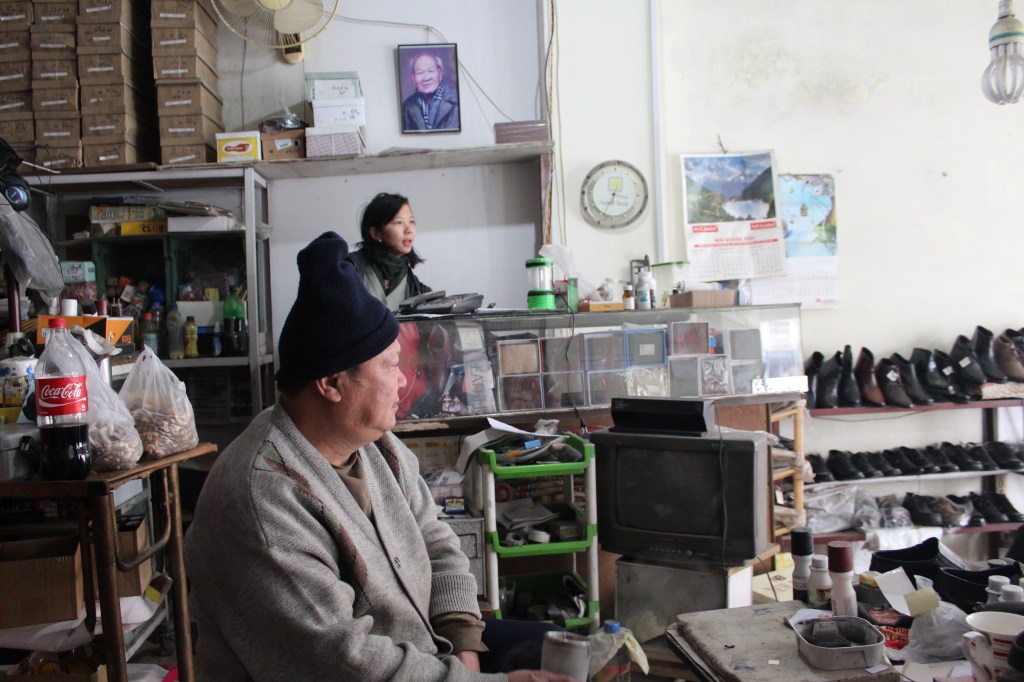
Chinese in Pakistan: diasporic identity, faith and practice
Asian Anthropology 16, no. 2 (2017): 133-147
Abstract
This report explores the Chinese diaspora in Pakistan, whose presence in the region spans multiple generations. The founding members of this community are considered “twice-migrants” in that they arrived in present-day Pakistan via British India and the former East Pakistan. In studying this diasporic community in Pakistan and their migratory trajectory, I pay particular attention to how regions of Asia were connected and the links within the Indian sub-continent in the early twentieth century across the port cities of Calcutta, Dacca, Chittagong, and Karachi. Drawing on firsthand interviews with ethnic Chinese in Lahore, Rawalpindi, Islamabad and Karachi, this report aims to create a picture of what their lives are like, and particularly discusses their adoption of Christianity and its intermixture with Chinese religious ritual in the context of a Muslim-majority society.
Book Chapters
Fool’s Gold: Tapping into Luxury
A chapter in Fabricating Authenticity, edited by Jason Ellsworth and Andie Alexander. United Kingdom: Equinox eBooks Publishing
Abstract
Building on Cotter’s argument, Lin uses her own ethnographic research on the supply chain of luxurious precious stones to argue that luxury, just as notions of authenticity, cannot be understood independently of material factors, social stratification or historical change. Lin shows how modern aesthetic shopping malls are designed to center consumerist practice in a fashion that reinserts the “authentic” into the shopping experience.
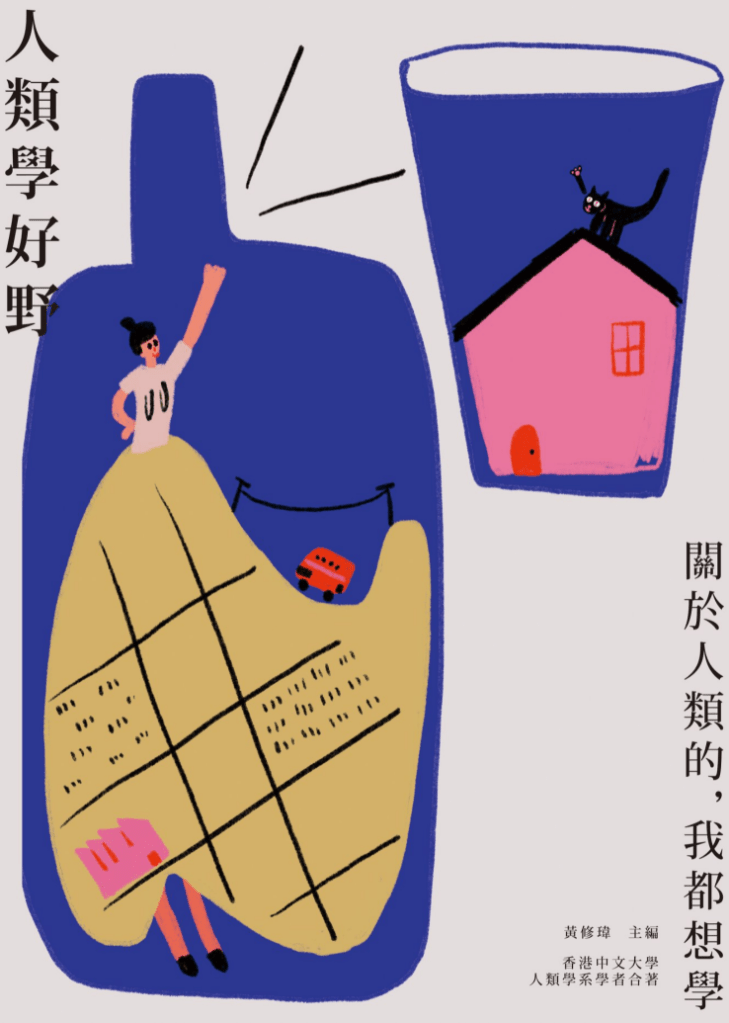
Cóng kuàngshān dào shìchǎng: Cǎisè bǎoshí de jiàzhí sùzào zhī lǚ
彩色寶石的價值塑造之旅
Mine to Market: Producing Value in Gems
A chapter in Rénlèixué hǎoyě–guānyú rénlèi de, wǒ doū xiǎng xué
人類學好野:關於人類的我都想學
Anthropology in the Field: All I Want to Learn About Humans, edited by Lynn Huang, pages 12-29, Hong Kong: Humming Publishing (2020).
Book Reviews
Review of Michael Herzfeld: An Intellectual Biography, by Heng Liu
Anthropological Quarterly 96, no. 4 (2023): 783-786
Public Writing
Along the Imperial Spectrum, with Serkan Yolaçan, Ping-hsiu Alice Lin, and Victoria Fomina
for Under the Rubric on the Comparative Studies in Society and History website, September 17, 2025
Friction and Collaboration in Asian Borderlands
International Institute for Asian Studies Newsletter (IIAS), No. 91, Spring 2022
About the article
Borders, borderlands, and frontiers are not new concepts. They each carry different meanings in different disciplinary contexts. While borders are most closely tied to conceptions of state sovereignty, they are also exceptionally salient devices across and within which resources, commodities, and people move, and in so moving, define, reinforce, or contest claims to national sovereignty and territory.
Cutting Edge
Anthropology News website, April 28, 2022
Covid-19 and Imaginaries of China
by Ping-hsiu Lin and Grazia Deng Ting
Plan A Magazine, 4 April, 2020
Being Chinese in Pakistan: Between Heritage and Home
DAWN, 9 August, 2018
 Ping-hsiu Alice Lin